Jarvish Blurry: Handcrafted Clarity
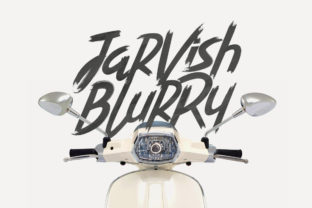
If you’ve ever scrolled past a social post, product label, or indie book cover and paused—not because of the image, but because the text itself felt warm, intentional, and quietly confident—you’ve likely encountered the subtle magic of a well-chosen display font. Jarvish Blurry isn’t just another premium font—it’s a deliberate departure from digital polish. Its gentle imperfections, soft edges, and organic stroke variation evoke the quiet confidence of hand-lettered signage, artisanal packaging, or a carefully inked journal entry.
Visually, Jarvish Blurry sits at an elegant intersection: it’s a serif font with soul, not stiffness. The serifs aren’t sharp or academic—they’re softened, slightly tapered, almost breathy. Letters carry subtle weight shifts, uneven baseline alignment in places, and delicate texture that reads as human-made rather than algorithmically smoothed. It’s not a script font or handwritten font—but it borrows their honesty. You won’t find rigid uniformity here. Instead, you’ll notice how the lowercase g leans just slightly, how the crossbar on the t feels like it was drawn with a fine brush, how spacing breathes differently between certain letter pairs. That’s by design—not oversight.
Where Jarvish Blurry Earns Its Keep
This isn’t a font for body copy or data tables. Jarvish Blurry shines where personality matters most: in moments of first impression and emotional resonance. Think logo design for small-batch coffee roasters, ceramic studios, or independent book publishers. It works beautifully in editorial design—especially mastheads, chapter openers, or pull quotes in print magazines focused on craft, sustainability, or slow living. On packaging design, it adds tactile credibility to soap labels, candle boxes, or tea tins without shouting.
In web design, use it sparingly and intentionally: hero section headlines, testimonial accents, or “About Us” banners where warmth and authenticity are strategic goals. For social media graphics, pair it with clean sans serif text for contrast—Jarvish Blurry over a muted photo background instantly signals care and curation. Bloggers and content creators building personal brands around storytelling, wellness, or creative entrepreneurship find it especially effective in email headers, course landing pages, or podcast show art.
What It Does for Your Audience—Not Just Your Aesthetics
Typography shapes perception faster than most realize. Jarvish Blurry doesn’t just look handmade—it feels trustworthy because it resists the sterile neutrality of many modern typefaces. That slight blurriness? It’s not visual noise—it’s visual empathy. It signals approachability, humility, and attention to detail over speed or scale. For audiences aged 20–50 who increasingly favor small businesses and values-driven brands, that nuance builds recognition before a single word is read.
It supports visual hierarchy naturally: its distinct texture draws the eye without needing oversized treatment. When used consistently across touchpoints—say, the same headline treatment on your website, newsletter, and printed business card—it strengthens brand identity through repetition rooted in character, not just color or logo placement. And while it’s expressive, it remains professional—not whimsical, not nostalgic, but grounded in contemporary modern typography with intentionality at its core.
Practical Fit: Does It Belong in *Your* Project?
Start with purpose, not preference. Ask: Is this a moment where warmth, craft, or quiet confidence needs to lead? If your project relies on clarity at small sizes (like UI buttons or footnotes), Jarvish Blurry isn’t the answer—it’s a display font, not a workhorse. But if you’re designing a wedding invitation suite, a limited-edition zine, or a brand refresh for a local bakery, it’s worth testing.
Check the included styles. Most versions include regular, bold, and sometimes italic variants—but no condensed or extended weights. That’s intentional. Its strength lies in presence, not flexibility. Before committing, test readability at your intended size: 36pt works powerfully on posters; 24pt holds up well on desktop headers; below 18pt, legibility begins to soften (as designed). That’s not a flaw—it’s a boundary. Respect it.
Smart Pairings and Realistic Combinations
Jarvish Blurry thrives when paired with restraint. Avoid other textured or decorative fonts—they’ll compete, not complement. Instead, lean into contrast: pair it with a neutral, highly legible sans serif font like Inter, Poppins, or even a classic like Adobe Garamond for print. Use Jarvish Blurry for headlines and short phrases; let the supporting font handle paragraphs, captions, and navigation.
Here’s what works in practice:
- A ceramics studio uses Jarvish Blurry for “Hand-thrown in Portland” on their homepage banner, then switches to a light-weight sans serif for studio hours and shipping info.
- An indie publisher sets chapter titles in Jarvish Blurry bold, then uses a crisp serif for body text—creating rhythm without visual fatigue.
- A wellness coach uses it only in their email signature (“With care,”) and keeps all other text clean and functional—making that one phrase feel like a quiet promise.
Licensing, Legibility, and Long-Term Use
Jarvish Blurry is a commercial font, meaning you’ll need an appropriate license for business use—even for client work where you’re the designer. Most reputable foundries offer clear, tiered licensing: personal, standard (for small businesses), and extended (for large-scale distribution or SaaS platforms). Always verify usage rights before embedding in web projects or using in physical products you sell.
One often-overlooked consideration: screen rendering. Because of its soft edges and fine details, Jarvish Blurry performs best on high-DPI displays and in larger sizes. On older monitors or at very small sizes in email clients, some subtlety may be lost—but that’s rarely where it belongs anyway. Its power lives in impact, not ubiquity.
Finally, remember that authenticity isn’t performative. Jarvish Blurry won’t make a generic brand feel special if the rest of the experience lacks sincerity. But for those already rooted in craft, care, or community—whether you're launching a new line of botanical skincare or redesigning your freelance portfolio—it offers something rare: a typeface that doesn’t shout, but still makes you unforgettable.