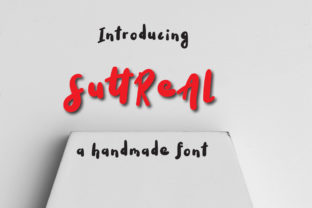
Sigma: A Neuron-Inspired Display Font for Thoughtful Typography
Sigma is a display typeface designed with structural intelligence and visual elegance in mind. Its name reflects both its mathematical connotation—signifying summation, precision, and system—and its conceptual origin: neural architecture. Each glyph is crafted to evoke the branching logic and adaptive connectivity of biological neurons, translating cognitive complexity into clean, legible form. Sigma is not intended for body text; rather, it serves high-impact typographic roles where clarity, distinction, and conceptual resonance matter.
Why Consider Sigma?
Designers and communicators often seek typefaces that do more than label—they signal intent, reinforce tone, and support narrative cohesion. Sigma appeals to those evaluating fonts for projects where intellectual rigor, modern minimalism, or scientific or technological themes are central. It’s especially relevant when typography must complement content about AI, neuroscience, data systems, education, or innovation-driven branding.
Its neuron-inspired design isn’t decorative—it informs function. The terminals, junctions, and stroke transitions are calibrated to balance uniqueness with readability at larger sizes. This makes Sigma suitable for environments where visual hierarchy and conceptual alignment carry weight: exhibition signage, academic conference identities, digital dashboards, or editorial mastheads.
Key Benefits and Practical Strengths
Sigma offers several tangible advantages for specific use cases:
- Distinctive yet legible display presence: Its carefully modulated contrast and open apertures ensure strong recognition even at moderate sizes (36pt and up), without sacrificing typographic sophistication.
- Conceptual consistency: When paired with content about learning systems, networked thinking, or structured reasoning, Sigma reinforces meaning through form—not metaphorically, but structurally.
- Optimized for digital interfaces: The font includes hinting and spacing adjustments suited for high-DPI screens, supporting crisp rendering in web headers, app launch screens, and interactive kiosks.
- Controlled stylistic range: Available in three weights (Light, Regular, Bold) with matching italics, Sigma avoids over-engineered variants while offering enough contrast for clear visual layering.
Tradeoffs and Realistic Expectations
No display font excels universally—and Sigma is no exception. Its strengths are purposefully bounded. It is not optimized for extended reading. Attempting to use Sigma for paragraphs, captions, or small UI labels will compromise legibility and accessibility. Line spacing, character width, and x-height are tuned for impact, not endurance.
Additionally, Sigma’s aesthetic relies on contextual harmony. In highly ornamental or historically grounded designs—such as heritage publishing, traditional luxury branding, or hand-crafted illustration—it may feel conceptually dissonant. Its “smart” character stems from abstraction and system logic, not warmth or tradition.
Licensing is another practical consideration. Sigma is distributed under a commercial license that permits web, desktop, and app use—but requires explicit permission for redistribution (e.g., embedding in SaaS platforms where end users access the font directly). Users evaluating it for enterprise applications should confirm license scope early in the selection process.
Where Sigma Fits Best
Sigma performs strongly in scenarios where typography supports cognitive framing:
- Educational technology interfaces: Dashboards that visualize learning pathways or adaptive assessments benefit from Sigma’s systemic rhythm and clean node-like terminals.
- Research institution identities: University labs, think tanks, or policy centers focused on complex systems often choose Sigma to reflect methodological discipline without resorting to sterile sans-serifs.
- Conference and event branding: For gatherings centered on AI ethics, computational linguistics, or human-centered design, Sigma signals thematic coherence without visual cliché.
- Editorial feature headers: In digital magazines covering science, philosophy, or design theory, Sigma provides typographic authority that invites attention without overwhelming content.
When to Explore Alternatives
Sigma is less appropriate—and alternatives deserve closer evaluation—in these situations:
- Multilingual or non-Latin scripts are required: Sigma currently supports Latin-based languages only (including extended Latin-1 and basic IPA). Projects requiring Cyrillic, Greek, Arabic, or East Asian characters will need complementary type solutions—or a different primary display face.
- High-contrast visual environments dominate: In brightly lit physical spaces (e.g., outdoor signage) or low-contrast digital backgrounds, Sigma’s subtle stroke modulation may reduce legibility compared to bolder, more monolinear options like Neue Haas Grotesk Display or GT America.
- Brand voice prioritizes approachability over precision: If the goal is friendliness, spontaneity, or craft—rather than clarity, structure, or analysis—fonts like Interstate, FF Meta Serif, or even IBM Plex Sans may better serve tone and audience expectations.
- Budget or technical constraints limit font loading: While Sigma is well-optimized, its variable-axis version (if available) or web font subsets require careful implementation. Teams with strict performance budgets may find lighter-weight alternatives easier to integrate without sacrificing readability.
Making an Informed Choice
Selecting a display font like Sigma is rarely about aesthetics alone—it’s about alignment between typographic behavior and communicative goals. Before committing, ask:
- What role does this font play? Is it establishing authority, guiding attention, or reinforcing a conceptual framework? If it’s primarily decorative or secondary to imagery, a simpler, more neutral option may be more effective.
- How will it scale across contexts? Test Sigma across intended sizes and surfaces: on mobile headers, printed posters, dark-mode UIs, and projected slides. Observe how its terminals and counters hold up—not just at ideal conditions, but at the edges of its functional range.
- Does it coexist well with your text font? Sigma pairs most effectively with humanist or geometric sans-serifs (e.g., Source Sans Pro, Work Sans) or restrained serifs (Charter, Adobe Text). Avoid pairing it with highly calligraphic or condensed faces that compete for visual emphasis.
- What do your users need—not just what looks compelling? Accessibility testing matters: ensure sufficient color contrast, avoid relying solely on Sigma for critical navigation labels, and verify screen reader compatibility in implemented contexts.
In summary, Sigma is a deliberate choice—not a default. It rewards thoughtful application and clarifies intention when used within its designed scope. For teams building around ideas of connection, logic, and emergent structure, it offers a rare combination of conceptual fidelity and typographic control. But its value emerges only when matched to the right problem, audience, and environment. Evaluating Sigma means asking not just “Does it look good?” but “Does it help people understand—and remember—what matters?”