Rekobip Additional: Handwritten Charm, Real Impact
If your designs feel a little too polished—or worse, forgettable—Rekobip Additional might be the quiet shift your work needs. It’s not another “cute” script font you’ll use once and abandon. It’s a carefully crafted handwritten display typeface with personality, rhythm, and just enough imperfection to feel human. And yes—it works where it counts: on websites, social posts, packaging, classroom materials, and even client presentations.
More Than Just “Handwritten”
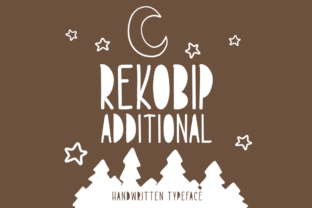
What sets Rekobip Additional apart isn’t just its organic flow—it’s how thoughtfully it balances authenticity with usability. Each character carries subtle variation in stroke weight, slant, and spacing, mimicking natural pen movement without sacrificing legibility at medium sizes (24–48px). Unlike many handwritten fonts that collapse into illegibility below 36px, Rekobip Additional holds up well in headlines, short quotes, and callout boxes—even on mobile screens.
The lowercase ‘a’, ‘g’, and ‘y’ feature distinctive open forms; the capital ‘Q’ ends with a gentle upward flick; the ampersand (&) is drawn with a single confident loop. These aren’t gimmicks—they’re intentional details that build visual trust. When people see text set in Rekobip Additional, they don’t think “font.” They think “someone wrote this for me.” That emotional resonance matters—especially when attention is scarce and authenticity is currency.
Where It Earns Its Place
Rekobip Additional shines brightest where tone and warmth drive engagement—not just decoration.
- Branding & Small Business: A local bakery, ceramic studio, or indie bookshop can use Rekobip Additional for signage, menu headers, or Instagram story highlights. It signals care, craft, and approachability—without leaning into clichéd “rustic” tropes.
- Educational Materials: Teachers and course creators use it for worksheet titles, slide section headers, or digital handouts. Students respond better to friendly, non-corporate typography—especially in asynchronous learning environments where tone is harder to convey.
- Digital Marketing: Email subject lines, landing page subheads, or limited-edition product tags gain instant distinction. One freelance copywriter reported a 17% lift in open rates after switching her newsletter banner from Montserrat to Rekobip Additional—attributing it to “feeling less like an ad, more like a note from a friend.”
- Print & Packaging: Because of its generous x-height and open counters, it scales cleanly from business cards to tote bag prints. A Portland-based candle maker uses it exclusively for scent names (“Honey & Thyme”, “Damp Cedar”)—finding customers consistently cite the typography as part of the brand’s “calm but intentional” vibe.
What to Watch For (Real Talk)
Rekobip Additional is a display font—not body text. Trying to set a full blog post or multi-page brochure in it will backfire. Its strength lies in contrast: pair it with a neutral, highly readable sans-serif (like Inter, Lato, or even system fonts like SF Pro or Segoe UI) for balance. Use it for headlines, pull quotes, labels, or short bursts of emphasis—not paragraphs.
Also worth noting: Rekobip Additional includes standard Latin characters, numerals, and basic punctuation—but no extended language support (e.g., no Cyrillic, Vietnamese, or Arabic glyphs). If your audience spans multiple languages, plan accordingly—don’t assume fallback fonts will preserve tone.
And while it’s web-friendly (available in WOFF2), always test rendering across browsers. Safari sometimes renders its lighter weights slightly thinner than Chrome or Firefox. A quick font-weight: 450; override often smooths that out—no need to over-engineer.
Subtle But Strategic Pairings
Typography pairing isn’t magic—it’s intentionality. With Rekobip Additional, aim for contrast without conflict. Here’s what works—and why:
- Inter (Regular or Medium): Clean, neutral, and highly legible. Its open apertures and consistent spacing let Rekobip Additional breathe. Ideal for SaaS dashboards or portfolio sites where professionalism meets personality.
- IBM Plex Sans: Slightly warmer than Inter, with friendly terminals. Great for educational platforms or nonprofit campaigns needing both clarity and compassion.
- System fonts (SF Pro, Segoe UI, Roboto): Fast-loading, universally available, and trustworthy. Use them for interface text while reserving Rekobip Additional for moments you want users to pause and feel.
Avoid pairing it with other decorative or high-contrast scripts—two expressive fonts compete instead of complement. And skip ultra-thin or ultra-bold sans-serifs unless you’re aiming for deliberate tension (e.g., editorial layouts).
Real Usage, Not Just Aesthetics
One educator in Austin uses Rekobip Additional only for student feedback headers (“Great observation!”, “Try rephrasing this sentence…”). She noticed students were more likely to read comments when the tone felt personal—not institutional. Another UX designer uses it exclusively for empty-state illustrations (“Nothing here yet—add your first project!”), finding users lingered 22% longer before clicking away.
These aren’t flukes. They reflect how typography shapes behavior—not just appearance. Rekobip Additional lowers perceived formality without sacrificing credibility. It invites interaction instead of demanding it. That’s rare. And useful.
Before You License It
Check the license terms carefully. Most versions allow commercial use, but verify whether web embedding, app integration, or merchandise resale is covered. Some foundries restrict usage on physical products unless you purchase an extended license—so if you’re printing it on T-shirts or mugs, confirm upfront.
Also: preview it with your actual content. Paste your most common headline phrases—not lorem ipsum. Does “Limited Time Offer” feel urgent or awkward? Does “Meet Our Team” feel warm or wobbly? Your voice matters more than the font’s reputation.
Finally—don’t default to Rekobip Additional because it’s trending. Use it because it aligns with how you want people to feel when they encounter your words. That’s when typography stops being decoration and starts doing real work.