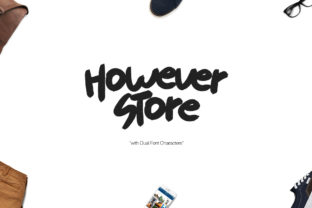
However Store: A Sweet and Simple Display Font with a Cool Twist
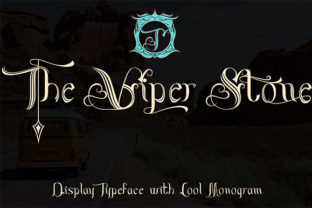
However Store isn’t just another clean, minimalist font—it’s a display typeface that balances approachability with quiet confidence. Designed for headlines, logos, short quotes, and branding moments where personality matters, it delivers modern simplicity without sacrificing character. Its rounded terminals, gentle contrast, and subtle irregularities give it warmth and humanity—qualities many overly geometric fonts lack. That “cool twist”? It’s in the unexpected rhythm of its letterforms: a slightly tilted ‘e’, a soft curve on the ‘a’, or the way the ‘g’ leans just enough to feel alive—not sterile.
Why People Reach for However Store (and Why They Sometimes Regret It)
Designers and small business owners often choose However Store because it feels fresh, friendly, and effortlessly contemporary—ideal for cafes, indie bookshops, wellness brands, or creative portfolios. But enthusiasm alone doesn’t guarantee success. Too often, users download it without checking compatibility, test it only at large sizes, or assume it works equally well for body text or long-form content. These oversights lead to real-world hiccups: poor readability on mobile, inconsistent rendering across browsers, or mismatched tone when paired with supporting fonts.
Mistake #1: Using It for Paragraphs or UI Text
However Store is a display font—not a text font. Its generous x-height and open counters shine at 36pt and above, but shrink below 24pt, and especially under 16pt, legibility drops sharply. Letters like ‘i’, ‘l’, and ‘1’ begin to blur; spacing tightens unpredictably; and screen rendering (especially on Windows or older iOS versions) can turn crisp edges into fuzzy blobs.
Better approach: Reserve However Store for titles, banners, and callouts. Pair it with a highly legible, well-hinted sans-serif like Inter, Open Sans, or even a thoughtful serif like Merriweather for body copy. Test your pairing at multiple sizes—and on actual devices—not just in design software.
Mistake #2: Ignoring Licensing Before Launching a Product
However Store is available in both free and premium versions—but the free version often comes with strict usage limits: no commercial redistribution, no use in client work unless you’ve upgraded, and no embedding in apps or SaaS platforms. One freelance designer used the free version in a Shopify theme they sold to 12 clients—only to receive a polite but firm licensing inquiry weeks later. Fixing it meant repurchasing licenses and reworking all live sites.
Better approach: Always read the license *before* integrating. Ask yourself: Will this appear in a client’s logo? On merchandise? In an app interface? If yes, confirm the license explicitly permits it. When in doubt, go with the full commercial license—it’s typically a one-time fee and avoids legal friction down the line.
Mistake #3: Assuming It Works Everywhere Out of the Box
However Store includes stylistic alternates and ligatures—but those won’t activate automatically in most CMS editors (like WordPress Gutenberg or Squarespace), email clients, or basic word processors. You might carefully craft a headline with a custom ‘&’ or swash ‘y’, only to see it revert to default glyphs when published.
Better approach: Use CSS @font-face with font-feature-settings for precise control on websites—or stick to the standard character set if your platform lacks OpenType support. For emails or social graphics, export headlines as SVG or PNG *after* applying alternates in design software. Never assume web-safe fallbacks will preserve your intent.
What to Check Before You Commit
Before downloading, buying, or building around However Store, run through these quick checks:
- Test real content: Type your actual headline—not “The quick brown fox”—but your brand name, tagline, or product title. Does the ‘t’ clash with the ‘h’? Does your company’s abbreviation look awkward?
- Check language support: However Store covers Latin-based languages well, but doesn’t include extended Cyrillic, Greek, or Vietnamese diacritics. If your audience uses accented characters regularly (e.g., café, naïve, résumé), verify glyph coverage in the specimen PDF or font tester.
- Preview performance: Load it on a lightweight page and run a Lighthouse audit. Some variable or heavily hinted versions add 80–120KB—unnecessary bloat if you only need one weight. Consider subsetting if you’re using it on high-traffic sites.
- Compare rendering across systems: Open your mockup on a Mac, a Windows PC, and an Android phone. Notice how hinting affects stroke consistency. If letters appear thinner or bolder than expected on certain OSes, adjust your fallback stack accordingly.
Pairing It Thoughtfully—Not Just “Pretty”
However Store thrives when contrasted—not matched. Avoid pairing it with other rounded, low-contrast display fonts (like Nunito or Quicksand); the result often feels monotonous, not harmonious. Instead, lean into intentional contrast: try it with a sturdy, neutral sans-serif (like Montserrat or Poppins) for balance, or a warm, organic serif (like Playfair Display or Cormorant Garamond) for editorial depth.
Here’s a realistic example: A local pottery studio used However Store for their logo and Instagram headers—but paired it with Roboto for website navigation and product descriptions. The contrast made their handmade aesthetic feel grounded, not whimsical. When they switched to a second rounded font for buttons, the interface lost visual hierarchy and felt “soft all over.” Reverting to Roboto restored clarity and trust.
A Final Note on Intentionality
However Store rewards thoughtful use—not speed or trend-chasing. Its charm lies in restraint: one weight, one purpose, one moment of emphasis. That’s why it works so well for small businesses and creators who want to signal authenticity without shouting. But like any tool, its value multiplies when you understand its boundaries—not just its beauty.
If you’re evaluating it for a project, ask not just “Does it look nice?” but “Does it serve the message, the medium, and the people reading it?” That shift—from decoration to intention—is where however store—and every good font—earns its place.