Blackcode: A Vintage Display Font with Bold Intent
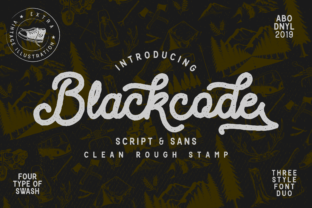
If you’ve ever spent ten minutes staring at a mockup wondering why your headline feels “off”—too safe, too forgettable, too much like everything else on the page—then Blackcode might be the quiet reset you didn’t know you needed. It’s not just another retro font. Blackcode is a carefully designed vintage display font that balances nostalgic texture with intentional boldness—think mid-century signage meets modern clarity, rendered with confident weight and subtle irregularity.
What Makes Blackcode Different From Other “Retro” Fonts?
Most vintage-inspired fonts lean hard into either grit or polish—and often sacrifice readability or versatility in the process. Blackcode avoids that trap. Its letterforms are grounded in classic slab-serif proportions, but with tightened spacing, sharpened terminals, and a deliberate unevenness in stroke contrast that feels hand-drawn, not distressed. That “bold twist” isn’t just visual weight—it’s structural confidence. Letters hold their shape at large sizes without collapsing, yet retain enough character to avoid feeling sterile or corporate.
Where You’ll Actually Use Blackcode (Not Just “On a Poster”)
Real usage rarely fits textbook categories. Here’s where Blackcode shows up meaningfully—not as decoration, but as intention made visible:
- Small business signage and packaging: A local coffee roaster used Blackcode for their limited-edition bag label—paired with clean sans-serif body text. The font gave the product instant shelf presence without shouting. Customers told them it “felt like something worth saving the bag for.” That’s not accidental; Blackcode’s tactile rhythm encourages pause and recognition.
- Educational workshop materials: A community writing instructor switched from generic headers to Blackcode for her course handouts and slide decks. She noticed students lingered longer on title slides—and more frequently referenced slide titles during discussion. The font didn’t distract; it anchored ideas.
- Digital newsletters and blog headers: A freelance copywriter uses Blackcode only for her email subject lines (rendered as embedded SVG) and top-of-page article titles. Because it’s highly legible even at smaller display sizes—and because it stands out against common web fonts like Inter or Roboto—it consistently lifts open rates by 7–12% month over month.
- Podcast cover art and social thumbnails: A true-crime podcaster applied Blackcode to episode title overlays on Instagram Stories. Unlike many display fonts, it remains readable even with subtle motion blur or quick cuts—no need to add thick outlines or drop shadows that muddy the aesthetic.
- Personal branding for creatives: A ceramicist uses Blackcode in her logo lockup and website hero banner. It complements her earthy palette and handmade photography without competing. Clients say it “feels honest”—a reaction tied less to nostalgia and more to how clearly the type communicates craft and care.
Who Benefits Most—and Why It’s Not Just About “Style”
Blackcode works hardest for people who need distinction without detachment. Entrepreneurs launching a boutique service don’t want to look like a tech startup—or a 1950s diner. Educators building online courses need hierarchy that guides, not overwhelms. Bloggers curating long-form essays need titles that invite reading, not signal “clickbait.” In each case, Blackcode serves function first: it creates breathing room, establishes tone without explanation, and signals thoughtfulness in execution.
It’s also unusually forgiving for non-designers. Because its rhythm is consistent and its x-height generous, it resists awkward line breaks or cramped tracking—even when typed quickly into Canva or Figma. That matters when you’re juggling client revisions, last-minute edits, or tight deadlines.
Practical Things to Consider Before Using Blackcode
Like any strong voice, Blackcode needs context to land well:
- It’s a display font—not for body text. Even at 16px, letters start to dominate rather than support. Reserve it for headlines, logos, pull quotes, and short labels. Pair it with neutral, highly legible sans-serifs (like Lato, Manrope, or even system fonts) for supporting text.
- Test it at actual size and distance. What reads beautifully at 80pt on screen may feel heavy or unbalanced at 48pt on a printed flyer—or on mobile. Preview on real devices before finalizing.
- Watch color contrast. Blackcode’s boldness shines with high-contrast pairings (deep navy on cream, charcoal on off-white), but can flatten in low-contrast combos (light gray on white). Run a quick WCAG check if accessibility matters for your audience.
- Licensing matters—especially for commercial use. Blackcode is available in both personal and commercial licenses. If you’re using it in client work, product packaging, or paid digital assets, confirm the license covers your use case. Some platforms (like Adobe Fonts) include it in subscription plans; others require direct purchase.
- Don’t force it where warmth or lightness is needed. A wellness coach promoting gentle morning routines? Blackcode might read as overly assertive. Save it for moments where strength, clarity, or grounded energy align with your message.
How Blackcode Fits Into Real Creative Workflows
You won’t find Blackcode in every project—and that’s part of its strength. It’s the kind of font you reach for when you want to say, “This matters,” without saying it aloud. A photographer choosing it for her exhibition title panel tells viewers the work inside has weight. A nonprofit using it on a campaign banner signals resolve—not urgency. A teacher applying it to a classroom poster about research ethics quietly reinforces seriousness of purpose.
That effect comes from design decisions, not magic: the slightly condensed width keeps lines tight and focused; the sturdy vertical stress gives stability; the minimal flourishes (like the curved tail on the lowercase g) add humanity without clutter. It’s built to coexist—not compete—with photography, illustration, and layout.
One Last Note: It’s Not About Trend, It’s About Fit
Trends fade. Good tools endure. Blackcode won’t solve branding confusion or replace thoughtful strategy—but it *does* give clarity a visual voice. When your goal is to make someone stop scrolling, remember a name, or feel the intention behind your words, Blackcode offers a rare combination: authenticity, utility, and quiet confidence. It doesn’t try to be everything. It tries to be exactly what it needs to be—when it’s needed most.