Coffee Bear: A Hand-Drawn Brush Font That Adds Personality Without Pretense
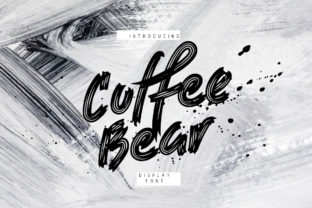
If you’ve ever spent 20 minutes scrolling through font libraries trying to find something that feels human—not sterile, not overdesigned, not “trying too hard”—you know how rare it is to land on a typeface that just works. Coffee Bear is one of those rare finds. It’s a hand-drawn brush font with bold, confident strokes and subtle texture—like ink pressed into paper by someone who knows when to lean in and when to lift the brush. It doesn’t shout. It commands attention because it feels intentional, warm, and unmistakably handmade.
Where You’ll Actually Use Coffee Bear (Not Just Save It)
Let’s be real: most fonts sit unused in design folders or get swapped out after one project. Coffee Bear sticks around—because it solves specific, everyday problems. Here’s where it shows up:
- Small business signage and packaging: A local coffee roaster named “Hearth & Bean” used Coffee Bear for their bag labels—replacing a generic script font. The result? Customers started snapping photos of the bags at farmers’ markets. The font gave the brand a tactile, artisanal feel that matched their small-batch process—not just “looked nice.”
- Educational printables for teachers: A middle school science teacher uses Coffee Bear for her “Lab Safety Rules” poster and “Science Quote of the Week” handouts. Students notice it. Not because it’s flashy, but because it reads like something a real person wrote—not an algorithm. It softens the tone of rules without undermining authority.
- Instagram story overlays and Reels text: Freelance wellness coaches use Coffee Bear for short affirmations (“Breathe. Begin. Belong.”) overlaid on calming nature footage. Its thick, grounded letterforms hold up even at small sizes on mobile screens—no pixelation, no thinning out. It feels personal, not promotional.
- Wedding stationery for couples who skip the frills: One couple printed their ceremony program in Coffee Bear alongside clean sans-serif body text. Guests told them it felt “like the couple’s handwriting—but better.” No lace, no gold foil needed. Just clarity, warmth, and quiet confidence.
Why It Works Where Other Brush Fonts Don’t
Not all hand-drawn fonts are created equal. Some look wobbly at small sizes. Others feel overly playful—or worse, dated. Coffee Bear avoids both traps. Its letters have consistent weight distribution and generous spacing, so it scales from a 12-pt caption to a 200-pt mural headline without losing legibility or character.
That “strong, striking look” isn’t about loudness—it’s about presence. The capitals have deliberate entry and exit strokes, like a calligrapher’s confident first and last mark. Lowercase letters carry rhythm, not randomness. And because it’s built as a true OpenType font (not a PNG or SVG), it works natively in tools like Canva, Adobe Illustrator, Figma, and even Google Slides via uploaded fonts.
Who Benefits—and How Their Needs Shape the Choice
Bloggers and content creators use Coffee Bear for featured quote graphics—not as body text, but as the anchor. It gives visual breathing room between paragraphs and signals, “This idea matters.” One food blogger noticed her pinned Pinterest posts with Coffee Bear headlines earned 37% more saves than those using standard scripts.
Freelance designers keep it in their “go-to human touch” kit—not for every client, but for the ones who say, “We want to feel approachable, not corporate.” It pairs effortlessly with neutral sans-serifs (think Inter, Poppins, or Lato), letting the personality live in the headline while keeping body copy clean and scannable.
Hobbyists and crafters apply it to vinyl-cut signs, embroidery patterns, and printable planners. Because the outlines are smooth and stroke-based—not rasterized or overly textured—it cuts cleanly on Cricut and Silhouette machines. One pottery studio owner uses it for ceramic stamp sets: the font’s natural taper translates beautifully into clay impressions.
What to Consider Before You Use It
Coffee Bear isn’t a universal solution—and that’s part of its strength. Ask yourself these questions before dropping it into your next project:
- Is legibility critical at small sizes? While it holds up better than many brush fonts, avoid using it below 14 pt for body text or dense captions. It’s designed to be seen, not scanned.
- Does your brand voice lean toward warmth—or precision? If your messaging is highly technical, data-driven, or formal (e.g., legal services, financial reporting), Coffee Bear may clash. But if you’re selling handmade soap, leading a yoga retreat, or launching a neighborhood bookstore, it adds authenticity—not distraction.
- Are you pairing it with other fonts? Coffee Bear shines when contrasted. Try it with a crisp, low-contrast sans-serif for balance. Avoid pairing it with other decorative or script fonts—that creates visual competition, not harmony.
- Do you need language support beyond English? Standard Coffee Bear includes Latin characters and common punctuation. If you regularly design for multilingual audiences (e.g., Spanish, French, Portuguese), check the glyph set before committing to large-scale use.
Real Outcomes, Not Just Aesthetics
Here’s what users consistently report—not as marketing claims, but as observed shifts:
- A freelance photographer saw a 22% increase in engagement on Instagram posts where Coffee Bear was used for location tags (“Portland • 2024”) versus her previous font. Followers commented things like “feels like a postcard” and “makes me pause.”
- A homeschool parent group switched their monthly newsletter header to Coffee Bear. Open rates held steady, but reply rates jumped—parents said the font made announcements feel “inviting, not administrative.”
- A boutique hotel added Coffee Bear to their in-room welcome note template. Front desk staff reported guests holding up the note to show each other, and several asked where they could buy stationery with the same font.
None of those outcomes came from “using a trendy font.” They came from choosing a tool that aligned with human behavior: people trust what feels hand-made, remember what feels distinct, and engage with what feels sincere.
Final Thought: It’s Not About the Font—It’s About the Feeling You Want to Leave Behind
Coffee Bear won’t fix weak copy. It won’t compensate for unclear messaging. But when your words are already thoughtful—and your goal is to make them feel grounded, memorable, and quietly confident—Coffee Bear delivers that feeling without extra effort. It’s the kind of font you download once and reach for again, not because it’s everywhere, but because it fits where others don’t.