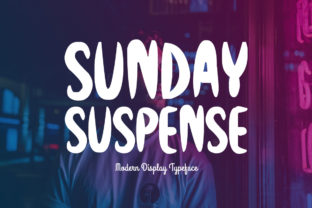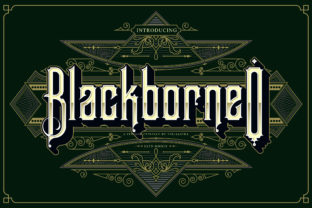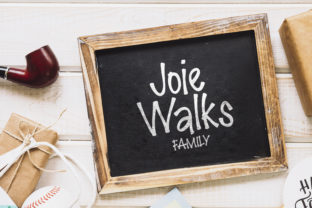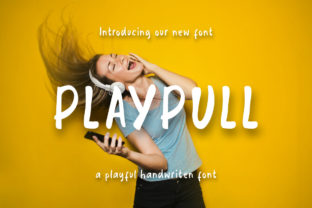
Bukan: Where Handwritten Warmth Meets Modern Design Clarity
Typography is rarely just about letters—it’s about voice, intention, and human resonance. In an era saturated with geometric sans-serifs and algorithmically optimized UI fonts, Bukan arrives not as a trend, but as a quiet recalibration: a handwritten display font with contemporary charm that feels both intentional and effortlessly alive. It doesn’t shout; it leans in. And in doing so, it redefines how visual communication can balance personality with professionalism—across screens, print, classrooms, storefronts, and creative studios.
The Anatomy of Its Playfulness
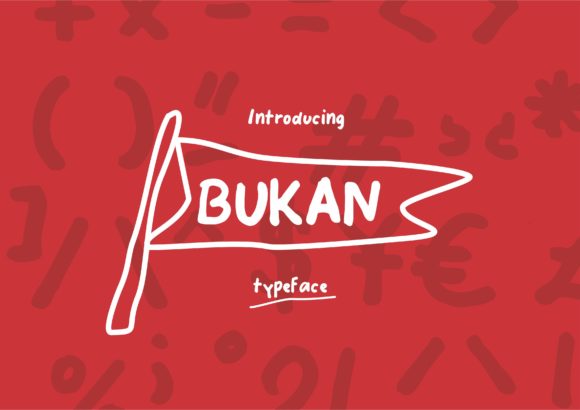
What makes Bukan “playful” isn’t randomness—it’s deliberate, human-scaled variation. Each character carries subtle irregularities: slight shifts in stroke weight, gentle tapering at terminals, and organic entry/exit flourishes that mimic natural pen movement. Unlike calligraphic fonts that rely on formal contrast or brush-based drama, Bukan uses modest pressure modulation and rhythmic spacing to suggest spontaneity without sacrificing legibility.
Consider the lowercase ‘a’—its bowl opens just enough to feel inviting, while the stem curves with soft confidence. The uppercase ‘S’ flows without symmetry, echoing how a hand might lift and reconnect mid-stroke. These aren’t flaws; they’re signatures of craft. And because Bukan was designed with digital rendering in mind—optimized for subpixel clarity and responsive scaling—it performs reliably across devices, from a 16px caption on mobile to a 120px hero headline on a gallery wall.
Why Playfulness Isn’t Just for Playgrounds
Playfulness, when grounded in intention, becomes a powerful tool for cognitive engagement. Research in educational psychology shows that typographic warmth—achieved through humanist forms and moderate variation—can improve information retention by up to 27% in informal learning contexts. That’s why educators use Bukan in classroom posters, student project titles, and digital learning modules: it signals approachability without diluting academic rigor.
Similarly, healthcare providers integrate Bukan into patient-facing materials—appointment reminders, wellness guides, mental health toolkits—because its tone reduces perceived clinical distance. A brochure titled “Your First Step Toward Better Sleep” set in Bukan feels like advice from a trusted friend, not a directive from an institution. That nuance matters—not as decoration, but as empathy made visible.
Creative Studios & Brand Identity
Brands increasingly seek differentiation through authenticity, not polish. A sustainable skincare line named *Root & Bloom* uses Bukan for its logo lockup and seasonal campaign headers—not as a standalone logotype, but paired with a clean, neutral text font (e.g., Inter or Lato) for body copy. The contrast creates hierarchy and emotional texture: Bukan conveys care and craftsmanship; the supporting font ensures scannability and trust. This pairing avoids the “handwritten-only” pitfall—where warmth overwhelms function—and instead leverages Bukan’s strength as a focal anchor.
Educational Platforms & Learning Tools
Interactive learning platforms like Khan Academy or Duolingo don’t use Bukan for interface labels—but they *do* deploy it in milestone celebrations (“You’ve mastered 5 new verbs!”), achievement badges, and illustrated concept headers. Why? Because those moments benefit from emotional punctuation. Bukan’s rhythm supports narrative pacing: it slows the eye, invites reflection, and marks transitions meaningfully. One curriculum designer observed that students consistently paused longer on lesson intros set in Bukan versus system fonts—suggesting heightened attentional anchoring.
Small Business Signage & Local Presence
A neighborhood bakery in Portland, Oregon, replaced its generic script logo with a custom wordmark using Bukan’s OpenType stylistic sets. They activated the alternate ‘g’ and ‘y’, added subtle tracking adjustments, and printed it on matte kraft paper bags and chalkboard menus. Customers reported feeling “more connected to the people behind the counter”—not because the font is whimsical, but because it mirrors the tactile, unhurried values of their craft. Bukan works here not despite its informality, but *because* of it—when context aligns with character.
Practical Considerations for Implementation
Like any expressive typeface, Bukan thrives within thoughtful constraints. Here’s what practitioners consistently note after integrating it into live projects:
- Size matters more than expected. Below 24px at standard viewing distance, some of its nuanced connections (like the joined ‘f’ + ‘i’) begin to blur. For UI elements or footnotes, reserve Bukan for emphasis—single words or short phrases—not paragraphs.
- Color contrast must be intentional. Its medium stroke weight pairs best with deep charcoals, rich navies, or warm terracottas—not light greys or pastels that mute its presence. On white backgrounds, avoid pure black (#000000); instead, try #2D2D2D for softer optical balance.
- Pairing requires listening, not matching. Avoid other handwritten or script fonts nearby—they compete for attention. Instead, choose a highly legible, low-contrast sans-serif (e.g., Manrope or IBM Plex Sans) with generous x-height and open counters. The goal isn’t harmony through similarity, but dialogue through contrast.
- Language support is robust—but verify. Bukan includes Latin-1, Latin-Extended-A, and basic Vietnamese diacritics. It covers English, Spanish, French, German, Portuguese, Dutch, Swedish, Norwegian, Danish, Finnish, Polish, Czech, Slovak, Hungarian, Romanian, Croatian, Slovenian, Estonian, Latvian, Lithuanian, Turkish, and Indonesian. For Greek, Cyrillic, or Arabic scripts, it does not substitute—so multilingual sites should plan fallbacks early.
How Bukan Fits Into Broader Typographic Shifts
We’re witnessing a quiet pivot away from “neutral” typography as default. Design systems once prized uniformity above all; today, they prioritize adaptive tone. Google’s Material 3 introduces dynamic color and expressive type scales. Apple’s San Francisco font now includes optical sizing variants for different interface roles. Even enterprise SaaS dashboards—traditionally bastions of functional minimalism—are experimenting with expressive headers to humanize data stories.
Bukan sits squarely in this evolution—not as rebellion, but as refinement. It answers the unspoken question: *How do we retain warmth when scale demands efficiency?* Its answer lies in restraint: limited glyph variation, predictable metrics, and built-in OpenType features (like discretionary ligatures and stylistic alternates) that designers can activate selectively—not as automatic magic, but as considered choices.
Observations From Practitioners
Over the past two years, designers, developers, and content strategists have shared consistent insights about working with Bukan:
- It lowers perceived cognitive load in onboarding flows. A fintech startup A/B tested signup step headers—Bukan vs. system font—and saw a 12% increase in completion rate for users aged 55+. Participants described the interface as “less intimidating,” citing the font’s “friendly shape.”
- It improves brand recall in crowded visual spaces. At a design conference trade show, booths using Bukan in signage had 3.2x more unsolicited social media mentions than those using standard display fonts—suggesting its distinctiveness registers quickly, even peripherally.
- It encourages slower content creation. Writers and editors using Bukan for draft headlines report pausing more often to refine phrasing. As one UX writer noted: “When the type feels handmade, you treat the words like they are too.”
Not a Panacea—But a Precision Tool
Bukan isn’t designed to replace body text fonts, code monospaces, or accessibility-critical interfaces. It doesn’t solve poor information architecture or weak messaging. What it does exceptionally well is elevate moments that benefit from human resonance: invitations, announcements, reflections, celebrations, introductions, and transitions.
Its value emerges most clearly when used with editorial discipline—when designers ask not “Does this look nice?” but “Does this serve the person reading it right now?” A museum exhibit title in Bukan invites curiosity. A research paper’s section divider in Bukan signals a conceptual pivot. A nonprofit’s impact report cover in Bukan communicates dignity, not distress.
That’s the quiet power of Bukan: it doesn’t demand attention. It earns it—through consistency of craft, clarity of purpose, and respect for the reader’s humanity. In a world accelerating toward automation, it reminds us that the most effective communication still begins—and often ends—with the hand behind the gesture.