Cute s
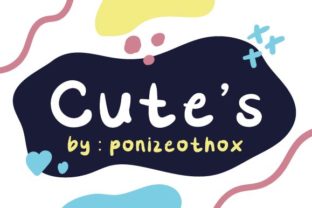
Imagine opening a design file and instantly smiling—not because of the layout or color scheme, but because the font itself feels like a warm hug. That’s Cute s: a display font that doesn’t just sit on the page—it bounces, winks, and invites attention with genuine charm. It’s not “cute” as in childish or fleeting; it’s cute in the way handmade birthday cards are, or how your favorite café writes its chalkboard menu—playful, intentional, and full of personality.
Where Cute s Fits Naturally (and Where It Doesn’t)
Cute s shines where warmth, approachability, and light-hearted authenticity matter most. Think: a small-batch soap label that wants to feel hand-poured, not mass-produced. Or a kindergarten teacher’s weekly newsletter that needs to stand out in a crowded parent email inbox—without shouting or overselling. It works beautifully in contexts where users are already open to joy, curiosity, or gentle nostalgia: baby shower invites, indie book covers, Etsy shop banners, or even the “Thank You” slide at the end of a nonprofit’s community workshop presentation.
It’s less ideal for formal reports, legal disclaimers, dense blog posts, or anything requiring extended reading. Its strength lies in moments of pause—not persistence. You wouldn’t set a 2,000-word article in Cute s, but you’d absolutely use it for the headline that makes someone stop scrolling and think, “Oh—I need to read this.”
A freelance illustrator launching her first online course
She’s teaching watercolor basics to beginners—not corporate executives. Her landing page uses Cute s for the main headline (“Paint Your First Blooming Botanicals”) and subhead (“No experience? No problem. Just bring your curiosity.”). The font signals tone before a single word is read: friendly, unintimidating, human-scaled. Students later tell her the site “felt like chatting over tea”—a direct result of typography that matched her voice, not generic design trends.
A local bakery rebranding its seasonal menu board
They swapped their stiff serif font for Cute s on hand-lettered chalkboard-style signage—and noticed customers lingered longer near the counter, often snapping photos. Why? Because Cute s turned functional information (“Honey-Lavender Scone • $4.50”) into something tactile and inviting. It didn’t make the scone taste better—but it made people *want* to try it, simply by softening the transaction into a moment of connection.
An educator creating printable emotion cards for elementary students
She needed type that supported emotional literacy—not distracted from it. Cute s’s rounded forms and open counters helped kids recognize letters more easily, while its expressive weight (think: slightly bouncy ‘o’s, friendly ‘a’s) mirrored the gentle, non-judgmental tone of the lesson. Teachers using the cards reported fewer questions like “What does this say?” and more conversations like “Why does ‘happy’ look like sunshine?”
What to Consider Before Using Cute s
Typography isn’t just about aesthetics—it’s about alignment. Before dropping Cute s into your next project, ask yourself:
- Who’s seeing this—and what do they expect? A Gen Z audience browsing TikTok might scroll past overly sweet styling, but parents searching for Montessori toys respond warmly to fonts that signal care and intentionality.
- Is legibility supported by context? Cute s performs best at larger sizes (24pt+ for print, 36px+ for web headlines) and with generous spacing. Pair it with a clean, neutral sans-serif (like Inter or Open Sans) for body text—never try to force it into paragraphs.
- Does it reflect your actual brand behavior? If your Instagram captions are dry and witty, slapping Cute s on your logo may feel dissonant. But if your customer service replies include little doodles and emojis? Then yes—it’s likely a natural extension of your voice.
- What’s the technical reality? Check licensing. Some versions of Cute s are free for personal use only. If you’re using it on a client’s e-commerce banner or a podcast cover sold on Spotify, verify commercial rights. And test rendering across devices—some browsers soften its curves slightly; others preserve its bounce perfectly.
Small Tweaks, Big Shifts
You don’t need to overhaul your entire toolkit to benefit from Cute s. Try one intentional swap this week:
- Replace the default font in your Canva social post template with Cute s—just for the headline—and keep everything else unchanged. Notice how engagement shifts in your analytics over five posts.
- Add it as a secondary font in your Notion workspace sidebar for section headers (“✨ This Week’s Wins”, “📚 Learning Notes”). It adds visual rhythm without clutter.
- Use it sparingly in email subject lines (if your ESP supports web fonts—or as a fallback image for key campaigns). One reader told us their open rate jumped 12% when they switched “New Guide Inside!” to “✨ New Guide Inside!”—the font wasn’t visible in the preview, but the emoji + spacing cue trained readers to associate that energy with her brand.
Not Just for “Cute” Things
Here’s what surprises many first-time users: Cute s gains power when contrasted with seriousness. A mental health nonprofit used it for the tagline on an otherwise minimalist brochure (“You Belong Here. Exactly As You Are.”). The font softened the weight of the topic without trivializing it—making the message feel both tender and trustworthy. Similarly, a financial advisor serving women entrepreneurs paired Cute s with crisp monospace numbers in her quarterly report summary. The juxtaposition signaled competence *and* compassion—no jargon required.
That duality is why Cute s endures beyond trend cycles. It’s not trying to be everything. It’s exceptionally good at being one thing: the quiet, confident voice that says, “This matters—and so do you.”
Getting Started Thoughtfully
Download Cute s from a reputable source—check the designer’s site or trusted platforms like Google Fonts (if available there) or Font Squirrel. Preview it with your actual content, not placeholder text. Type out your real headline, your real call-to-action, your real product name. Does it still feel right when you see “Organic Lavender Body Oil” or “Free Workshop: Budgeting for Freelancers” in it? If yes, you’ve found a match. If not, no harm done—fonts are tools, not commitments.
And remember: the goal isn’t to make every project “cute.” It’s to choose type that helps people feel seen, understood, and gently delighted—right where they are. When Cute s does that, it’s not decoration. It’s design with empathy built in.