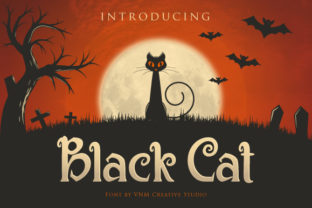
Black Cat: Spooky, Fun & Cute Halloween Font
Black Cat isn’t just another Halloween typeface—it’s a cheerful burst of personality designed to bring charm and character to seasonal projects. Think of it as the friendly ghost at the party: delightfully eerie but never scary, whimsical without being childish, and instantly recognizable at a glance. It’s a display font, meaning it shines brightest in headlines, signs, labels, and short bursts of text—not long paragraphs. Its playful bounce, subtle feline-inspired curves, and balanced spacing make it ideal for anyone wanting to add warmth and wit to autumn crafts, social posts, or small-business promotions.
What Makes Black Cat Stand Out?
At first glance, Black Cat feels familiar—like handwritten chalkboard lettering with a wink. But look closer: the lowercase “a” has a soft tail curl, the “g” ends in a gentle hook, and the capital “B” nods to classic cartoon styling. These thoughtful details aren’t gimmicks—they’re functional touches that reinforce its vibe. The font includes standard Latin characters, numerals, and common punctuation, so it’s ready for real-world use right out of the download.
It’s not overly ornate or difficult to read. That balance is key. Too much spookiness can feel dated or hard to pair; too much cuteness can lack seasonal punch. Black Cat lands right in the middle—spooky enough for October, fun enough for all-ages events, and cute enough to soften even the most dramatic décor.
Where You’ll Love Using Black Cat
This font thrives where personality matters most. Here are everyday examples that reflect how people actually use it:
- DIY Halloween décor: Stencil “BOO!” on burlap banners, print treat bag tags, or hand-letter “Trick or Treat” on cardboard standees—all with consistent charm.
- Social media graphics: Create Instagram Stories for a pumpkin-carving workshop or Facebook event banners for a neighborhood hayride. Black Cat adds instant seasonal flair without needing design experience.
- Small business branding: A local bakery might use it for limited-edition “Witch’s Brew Brownies” packaging; a craft studio could feature it on class flyers for “Spooky Slime Making.”
- Educational materials: Teachers print reading posters with themed vocabulary (“broom,” “cauldron,” “pumpkin”) or use it for classroom door decorations—engaging students without overwhelming them visually.
- Digital invitations: Whether it’s a virtual costume party or an in-person trunk-or-treat RSVP page, Black Cat gives digital invites texture and tone that generic fonts miss.
Why It Fits So Many People—and Projects
Adults aged 20–50 often juggle multiple creative roles: parent planning a kid-friendly haunt, freelancer designing client assets, educator preparing seasonal lessons, or entrepreneur launching fall merchandise. Black Cat supports all of them because it’s flexible *and* intentional. It doesn’t require advanced typography knowledge—just an eye for what feels right. You don’t need to adjust kerning or build custom ligatures to get great results.
Its appeal also lies in emotional resonance. Halloween isn’t just about fright—it’s nostalgia, community, playfulness, and shared tradition. Black Cat reflects that duality. It helps creators communicate joy alongside mystery, making projects feel inclusive rather than exclusionary. That’s especially valuable when designing for mixed-age groups, neurodiverse learners, or audiences who prefer lighthearted over intense themes.
Practical Tips Before You Start
Like any tool, Black Cat works best when used thoughtfully. Here’s what to keep in mind:
- Use it for impact, not immersion: Reserve it for titles, logos, buttons, or short phrases. Avoid body text—it’s not built for extended reading.
- Pair it wisely: It plays well with clean sans-serifs (like Open Sans or Montserrat) for contrast, or soft serifs (like Merriweather) for a vintage storybook feel. Avoid other highly decorative fonts—they’ll compete instead of complement.
- Check licensing early: Free versions may be available for personal use, but commercial projects (like selling printable kits or branded merchandise) usually require a paid license. Always verify permissions before publishing.
- Test legibility across sizes and surfaces: What looks charming at 72pt on screen may blur on a tiny jar label or fade on textured paper. Print a sample or view mockups on mobile devices before finalizing.
- Consider color carefully: While black-on-orange is classic, Black Cat also sings in deep purple, forest green, or creamy off-white—especially against matte or kraft backgrounds.
A Font That Grows With Your Ideas
One reason creators return to Black Cat again and again is how easily it adapts. A blogger might use it one year for a “30 Days of Spooky Recipes” series header, then switch to a minimalist layout the next—keeping the same font to maintain brand continuity. A teacher could reuse it across bulletin boards, worksheets, and slide decks without repeating visuals. Even hobbyists find it endlessly reworkable: trace letters onto wood slices, layer them in Cricut Design Space, or embroider them onto tea towels.
It’s also forgiving for beginners. If your alignment isn’t perfect or your spacing feels uneven, Black Cat’s inherent rhythm helps smooth things out. That built-in friendliness reduces pressure—letting you focus on storytelling, connection, and celebration instead of technical perfection.
Final Thought: Let Personality Lead
Halloween is one of the few times of year when creativity and kindness go hand-in-hand. Whether you’re crafting for your kids, launching a seasonal product line, or simply brightening your corner of the internet, choosing a font like Black Cat signals intention. It says you care about tone, inclusivity, and joy—not just aesthetics. And that makes every project feel more meaningful, no matter how big or small.